Services · Cabinet Refinishing

Cabinet Refinishing.

A full strip, sand, stain or paint, and topcoat — performed in our Gilbert shop with a Sherwin-Williams finish system. Your existing boxes and doors; a new surface that holds up to a working kitchen.

Family-operated since 2003 Owner-led by Frank D'Esposito Sherwin-Williams finish system Gilbert, Arizona shop Nextdoor Neighborhood Favorite

← Back to Services

Service · Refinishing Strip · Sand · Stain · Topcoat

A real finish system, not a weekend paint job.

Refinishing keeps your existing cabinet boxes and doors in place and replaces only the surface — the stain or paint and the protective topcoat on top of it. Done well, it returns a tired kitchen to showroom condition without demolition, new flooring, or new countertops.

The difference between a refinish and a DIY paint job is what happens before the color goes on. We strip the old finish back to bare wood or to a clean substrate, sand through grits to the right tooth, fill grain where the design calls for a smooth surface, and only then move into stain or pigment. The colorcoat is followed by a catalyzed Sherwin-Williams topcoat — the same finish system we run on our new custom cabinetry. That topcoat is what survives daily wipe-downs, hand oils, and the cabinet door under the sink that gets bumped open six times a day.

A brush-and-roller paint job over the existing factory finish skips every one of those steps. It looks acceptable for a few months and then it chips at the edges, peels around hardware, and yellows where it meets sunlight. Our refinishing process is built to outlast the original factory finish, not to imitate it.

Refinishing is not refacing. Refacing replaces the doors, drawer fronts, and exterior box veneers with new material — it changes the cabinet style. Refinishing keeps every door and box and changes the color and protective surface. We do both, and we'll tell you honestly which one your kitchen needs.
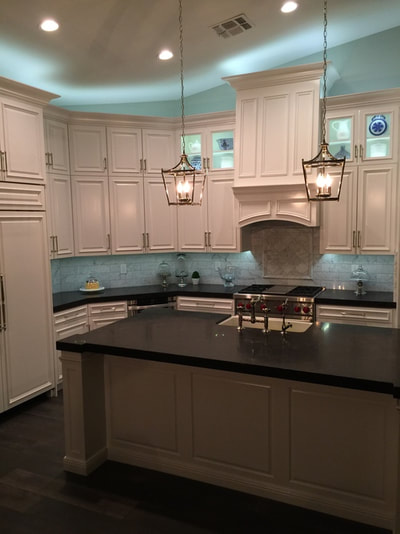
Refinished cabinet detail
Finish · Sherwin-Williams

The topcoat is the part you can't see — and the part that decides how long the kitchen lasts.

We spray a catalyzed Sherwin-Williams finish in our Gilbert shop wherever the project allows, and we use the same system in place for boxes that have to stay on the wall. The chemistry is the same; the difference is the dust control of a spray booth vs. a job site.

Frank D'Esposito has been refining this finish process since opening the shop in 2003. The wood comes from our regular partners — Gizir for substrates, Querkus and Decospan for veneers when a door needs to be replaced — and the color is mixed and sprayed by the same hands that build the company's new custom kitchens. There is no separate "refinish crew" that gets the leftover work.

Request a Consultation
Method Refinishing Process

From dated finish to topcoat-cured.

01

In-home assessment

We come to the house, open every door, and inspect substrate, hinges, and any prior paint or finish work. If the existing boxes can't carry a refinish — water damage, particleboard delamination, failing joinery — we say so and recommend refacing or replacement instead.

02

Removal and labeling

Doors, drawer fronts, and removable hardware come off and are labeled by location. They travel back to our Gilbert shop. Boxes stay on the wall and are masked off in place.

03

Strip and sand

Old finish is stripped down to bare wood or to a clean, sound substrate. We sand through the appropriate grit progression for the species and the final look — open-pore for stained finishes, fully filled for smooth painted finishes.

04

Color — stain or pigment

Stain is wiped, toned, and corrected to the approved sample. Painted finishes are sprayed in a sealed booth, sanded between coats, and corrected for any nib or run before the topcoat goes on.

05

Catalyzed Sherwin-Williams topcoat

The protective topcoat is sprayed in multiple passes with sand between coats. This is the layer that decides whether the cabinet is wipeable, hand-oil resistant, and able to survive a working kitchen.

06

Rehang and walkthrough

Doors and drawer fronts come back to the house, get rehung in their labeled locations, and are adjusted for reveal and soft-close. We walk the kitchen with you and close any punch-list items before we leave.

Knowledge FAQ

Refinishing — common questions.

What's the difference between refinishing and refacing?

Refinishing keeps every door, drawer front, and box in place and changes the surface — strip, sand, new stain or paint, new topcoat. Refacing keeps the boxes and replaces the doors, drawer fronts, and exterior veneers with new material — it changes the cabinet style and door profile. Refinishing is the right call when the doors are sound and you want a color change. Refacing is the right call when the door style itself is dated.

How is this different from painting the cabinets myself?

A DIY paint job is brush-and-roller over the existing factory finish. Ours strips down to bare substrate, sands through grits, sprays color in a controlled environment, and finishes with a catalyzed Sherwin-Williams topcoat. The topcoat is what separates a finish that lasts from one that chips at the edges inside a year.

Can any cabinet be refinished?

Most can. We need sound boxes, sound joinery, and a substrate that holds an adhesive coat — solid wood, plywood, or quality MDF. Thermofoil doors, water-damaged particleboard, and any cabinet with failing structure are better candidates for replacement or refacing. We tell you which category yours falls into during the in-home assessment.

Do I have to leave the house while you work?

No. Doors and drawer fronts come back to our Gilbert shop for the messy stripping, spraying, and curing. Box exteriors are sanded and finished in place with the kitchen masked off. You keep using the rest of the house. Plan on a stretch where the cabinets are open and contents are bagged or boxed.

How long does a refinishing project take?

A typical kitchen refinish runs two to three weeks from the day we pull doors. Larger kitchens, hand-applied glaze finishes, or projects that mix stained and painted elements take longer. We give a real calendar at the assessment, not a placeholder.

What finishes can you match?

Painted finishes in any Sherwin-Williams color, stains from light naturals through dark espressos, and combination treatments — glazed, distressed, two-tone uppers and lowers. We sample on a door from your kitchen so you approve the actual finish on the actual wood before we commit the room.

Do you only serve Gilbert?

Our shop is in Gilbert at 714 N. Monterey St., and the East Valley is our home market — Gilbert, Chandler, Mesa, Tempe, Queen Creek. We take residential and commercial refinishing work across the Phoenix metro on a project-by-project basis.

A new finish · same kitchen footprint

Refinish, don't replace.

In-home assessment, real finish samples on your actual doors, and a written scope before any door comes off the wall.

Related Other Services

Compare the three cabinet paths.